
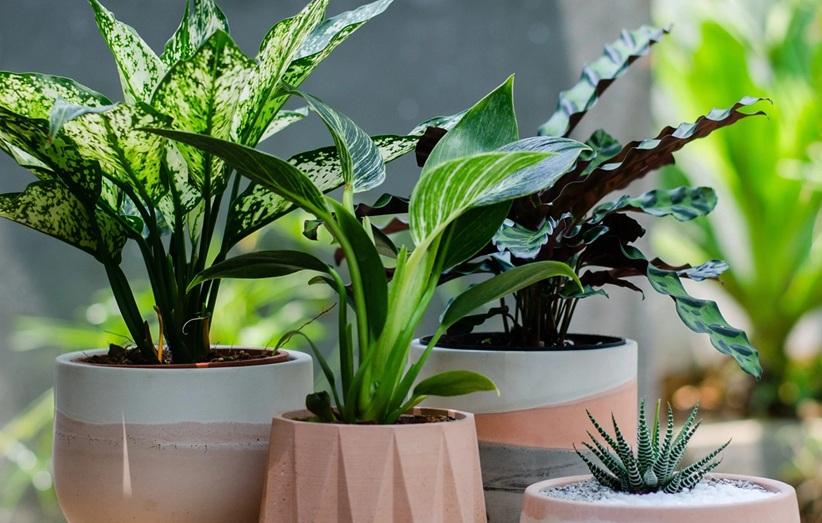
Bringing plants into your home should not feel like hard work. Most plants inside do not die because people ignore them. They usually die because what they need and how you live do not match. Before you buy that nice big plant at the shop window, take a good look at your daily habits, space at home, and routine.
Choosing the best Indoor Plants means you should match caring for the plant with your own routine. You don’t need to change how you live. If you go away for work every week, or sit at home each night, pick plants that fit how you live. This helps your plants grow well and keeps you from having empty pots.
Assess Your Living Environment First
Before you look at certain types of plants or animals, take time to see what your room is really like.
Lighting Conditions
Direct Sunlight: Windows on the South or West side that get 4 hours of full sun. Ideal for succulents, cacti, and citrus trees.
Indirect Sunlight: Areas with lots of light that reflects off the wall or is diffused by translucent window treatments. Great for monstera, pothos, and figs.
Low Sunlight: North facing areas and dark corners. Ideal for snake plants, ZZ plants, and cast iron plants.
Ambient Humidity & Temperature
Windows, air conditioners, and heaters can be drafty and make the air different in every room of the house. The calathea needs a lot of moisture in the air. The sansevieria will tolerate dry air indoors and can be cultivated with ease.
Match Your Lifestyle to the Right Plant Profile
1. The Frequent Traveler
- Habits: Gone for 1 to 3 weeks at a time, with a schedule that is hard to guess.
- Best Choice: Snake Plant (Sansevieria) or ZZ Plant (Zamioculcas zamiifolia).
- Why it works: These plants keep water in their thick roots and thick leaves. They can do well with little water and can handle room temperature that goes up and down.
2. The Attentive Plant Parent
- Habits: Likes to have conversations with these plants everyday, spray water on them, inspect their leaves, and water them on a regular basis.
- Best Choice: Calathea or Fittonia (Nerve Plant).
- How it fits: These plants will immediately inform you when they need watering. In addition, these plants require a lot of moisture in the air, and therefore you will be happy taking care of them.
3. The Low-Maintenance Professional
- Habitat: Daily busy schedules at work, enjoys watering the plants regularly as per schedule, needs showy plants.
- Preferred choice: Pothos (Epipremnum aureum) or Heartleaf Philodendron.
- Reasoning: This type of plants grows very rapidly and also tolerates water stress due to their high ability to survive. You can tell about their requirement for water from the falling of their leaves, but again, they flourish after watering.
Quick Comparison: Plant Matching Guide
| Lifestyle Type | Water Needs | Light Requirement | Recommended Species |
| Frequent Traveler | Once every 3–4 weeks | Low to Bright | Snake Plant, ZZ Plant |
| Attentive Parent | 2–3 times per week | Medium to High | Calathea, Nerve Plant, Ferns |
| Busy Professional | Once every 1–2 weeks | Medium | Pothos, Philodendron, ZZ Plant |
| Sun-Drenched Space | Dry out completely | Direct Sunlight | Succulents, Cacti, Jade |
Frequently Asked Questions
How do I know if my room has low or medium light?
If there’s plenty of light, the shadow should be crisp and sharp when there’s a 12-inch gap between your hand and the white paper. A diffuse shadow will occur when there is medium light. As the light is limited, there will be dim shadows.
Are there any low-maintenance plants that can be done with pets?
No, it’s not because Snake Plants and ZZ Plants are poisonous to pets, such as dogs and cats. Peperomia, Parlor Palms and Spider Plants would all be good options.
What can I do to solve overwatering problems?
Allow the soil to get dry before watering again. Make sure that the pot has holes in its base through which excess water can drain. Pour off any water that remains in the saucer.
Conclusion
Indoor Plants selection that performs well indoors is not something related to being gifted with plants since the moment of birth. Choosing plants that suit you is more about picking the right things that you need. When you pick the plants that match the conditions of your home, it becomes easy to look after them. It’s quite satisfying to maintain your plants in excellent condition.