
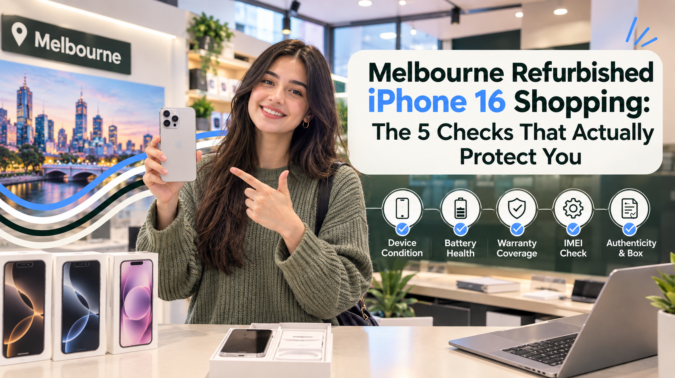
Plenty of sellers across Melbourne list refurbished iPhones every day. Shopfronts, online ads, marketplace apps, all claiming a fair deal. But whether that deal is actually safe comes down to what you verify beforehand, not where the seller happens to be based. Here is exactly what to look into.
Proximity Alone Does Not Guarantee a Safe Purchase
Buying from a seller based in Melbourne, say a shop like Reebelo.com.au, naturally feels more reassuring than buying from a stranger interstate. And in fairness, it often is. You can meet face to face, examine the device yourself, and know there is a physical location to return to if needed.
But being nearby does not automatically make someone honest. A dishonest seller down the road causes the exact same problems as a careless one online. Genuine protection comes from the checks you run yourself, not simply from geography.
Check One: Pull Up the IMEI Before Agreeing to Anything
Ask for the IMEI number straight away. You can find it by dialing star pound zero six pound on the phone itself, or by heading into Settings, then General, then About. Take that number and run it through any free IMEI lookup tool online, confirming the device carries no blacklist flag, no theft report, and no lingering finance balance attached.
Skipping this step is risky. A phone can look flawless and still turn into a useless brick the second you pop in a SIM card if it turns out to be tied to a blacklist from its previous life.
Check Two: Look Closely at Battery Health and Part Authenticity
Head into Settings, then Battery, then Battery Health and Charging, and compare what you see against what the listing promised. While you are there, check carefully for any alert about a non-genuine battery component, since that usually points to an unofficial repair somewhere in the phone’s past.
Aim for a battery sitting above 85 percent if you want a comfortable, worry-free daily experience. A lower number is not necessarily a dealbreaker, but it should show up clearly in the asking price, and any non-genuine part warning deserves a straight answer from the seller before you go any further.
This is exactly the kind of detail where you need a seller who lays everything out honestly. No borrowed stock images, a straightforward account of the battery’s actual condition, and a documented inspection behind it. That is what trade.com.au offers on every listing, paired with the added comfort of a genuine twelve-month warranty.
Check Three: Make Sure the Phone Is Truly Unlocked and Disconnected From Old Accounts
Get the seller to confirm the handset works across any Australian network, not just the one they personally use. If you are meeting in person, bring along your own SIM card and test it on the spot before handing over any money.
Equally critical, confirm the device has been fully signed out of the previous owner’s Apple ID, with Find My iPhone switched off completely. A phone still tethered to someone else’s account can end up permanently locked, regardless of how well everything else checks out.
Check Four: Put Every Function Through Its Paces in Person
Meeting face to face lets you do something online buying simply cannot offer. Look over the screen carefully under strong lighting for scratches or dead pixels. Run your eyes across the frame and back panel for dents or hairline cracks. Try every button, Face ID, both cameras, the speaker, and the charging port right there in front of the seller before agreeing to buy.
Do not rush through this part. A genuine seller expects this level of scrutiny and will not mind waiting. If someone seems eager to hurry the meeting along, treat that as a signal worth paying attention to.
Check Five: Get the Warranty Terms Written Down
This is the step buyers forget most often, yet it carries real weight. Ask plainly whether a warranty comes with the sale, and if it does, get those terms recorded on paper or through an official receipt rather than taking a spoken promise at face value.
Private sellers rarely back their sale with any kind of warranty, so any fault discovered afterward becomes entirely your problem to solve. A seller who puts real, documented warranty coverage behind their sale is offering something a casual private transaction simply cannot replicate.
Choosing a Public, Sensible Spot to Meet in Melbourne
If you are meeting someone privately, stick to public, well-lit areas. Shopping centre entrances, busy cafes, or spots covered by security cameras all work well for this kind of handover. Steer clear of quiet locations or late-night meetups, no matter how convenient the seller makes it sound.
Bring a friend along if you can, or at least tell someone where you are headed and when you expect to be back. It is a small precaution that adds real peace of mind for any cash-based, in-person exchange.
Thinking About the iPhone 15 Instead?
While you are weighing your Melbourne options, it is worth also glancing at a certified refurbished iPhone 15 with warranty. It shares a lot of the same daily functionality as the 16, usually at a noticeably lower price point, and every single check covered above applies just as much, no matter which generation you end up choosing.
Final Word
A refurbished iPhone 16 purchase in Melbourne can absolutely be a safe one, but that safety rests entirely on the specific checks you carry out before paying, not simply on the seller being local. Verify the IMEI, confirm battery health and genuine parts, test the unlock status yourself, inspect the phone thoroughly, and lock in warranty terms in writing.
Run through these five checks properly, and buying refurbished turns into a confident, well-informed decision, whether you are shaking hands with a seller in a Melbourne cafe or clicking through a trusted listing from home.